Aug 8, 2026Latest News & Expert Articles
Why Are Catalytic Converters Stolen? What Vehicle Owners and Parts Buyers Should Know
Learn why catalytic converters are targeted for theft, which vehicle factors affect exposure, and what buyers should check when considering an anti-theft shield.
Catalytic converter theft is not only a consumer inconvenience. For automotive aftermarket distributors, repair businesses, fleet buyers and parts wholesalers, it also creates demand for replacement converters, vehicle-specific shield products and practical buyer education.
The core issue is simple: a catalytic converter sits under the vehicle, contains valuable materials, and can sometimes be removed quickly with basic cutting tools. But the buying decision that follows is rarely simple. The correct replacement part or anti-theft shield depends on vehicle year, make, model, body layout, converter position and installation requirements.
This guide explains why catalytic converters are stolen, why some vehicles attract more attention, what happens after theft, and what buyers should check before choosing a catalytic converter anti-theft shield.
Why Catalytic Converters Become Theft Targets
A catalytic converter is part of a vehicle exhaust system. Its job is emissions-related, but the reason it becomes a theft target is usually economic: converters contain precious metals such as platinum, palladium and rhodium. The value of those metals changes over time, so responsible sourcing content should avoid quoting current prices unless the figures are dated and sourced.
Converters are also exposed compared with many other vehicle parts. They are installed under the vehicle, not inside a locked cabin or engine compartment. On some vehicles, a thief may be able to reach the exhaust area without lifting the vehicle very far. That access point is one reason theft-prevention discussions often include parking behavior, marking or etching, alarms, cameras and physical barrier products.
For parts buyers, the practical takeaway is this: catalytic converter theft is both a replacement-parts issue and a protection-accessory issue. A customer may need a replacement catalytic converter after a theft, a shield to help deter future access, or both depending on the vehicle and repair situation.
Why Vehicle Design Can Affect Theft Exposure
Not every vehicle has the same theft exposure. Vehicle design can affect how easy it is to reach the converter area. Ground clearance, underbody layout, exhaust routing and converter location all matter.
Hybrid vehicles are often discussed in theft-prevention research because their converters may contain more recoverable material in some applications and may experience different exhaust operating patterns than conventional vehicles. The Toyota Prius is a common buyer-interest example in this category. Larger or higher-clearance vehicles can also attract attention because underbody access may be easier.
The Honda Element is another vehicle that appears frequently in catalytic converter theft discussions and buyer searches. Its practical box-style body and underbody access are part of why owners and repair buyers often look for application-specific shield options.
These examples should not be treated as a permanent ranking of theft risk. Theft patterns change by region, enforcement, scrap-market conditions and vehicle population. For product sourcing, the more useful question is whether a shield configuration exists for the exact vehicle application being supported.
What Happens When a Catalytic Converter Is Stolen
When a catalytic converter is removed, the immediate signs can be obvious. The vehicle may become much louder because the exhaust system has been cut open. Drivers may notice exhaust smell, reduced drivability, warning lights or visible damage under the vehicle.
For repair businesses and distributors, the bigger issue is confirming exactly what is missing or damaged. A theft may remove only the converter section, or it may damage oxygen sensor wiring, flanges, pipes, mounting points, gaskets or nearby hardware. Before quoting parts, buyers should collect photos of the underbody and confirm the vehicle information.
At minimum, request:
Vehicle year
Make
Model
Engine information if available
Converter position
Photos of the damaged area
Any OE reference or interchange information available from the repair process
Destination market
Destination market matters because emissions-related requirements vary. A replacement converter should not be described as approved for a market unless the relevant documentation is available for that specific product and application.
Common Catalytic Converter Theft-Deterrent Approaches
There is no single method that can remove theft risk completely. Practical deterrence usually combines several measures.
Common approaches include:
Parking in well-lit or monitored areas when possible
Using garages, controlled yards or fleet lots where available
Installing cameras or motion lighting in storage areas
Marking or etching the converter to improve identification
Using alarms or vibration-sensitive deterrents where appropriate
Adding a vehicle-specific shield or barrier around the converter area
For distributors and repair businesses, it helps to frame these options honestly. A shield can be part of a deterrent strategy, but it should not be sold as making theft impossible.
How an Anti-Theft Shield Works
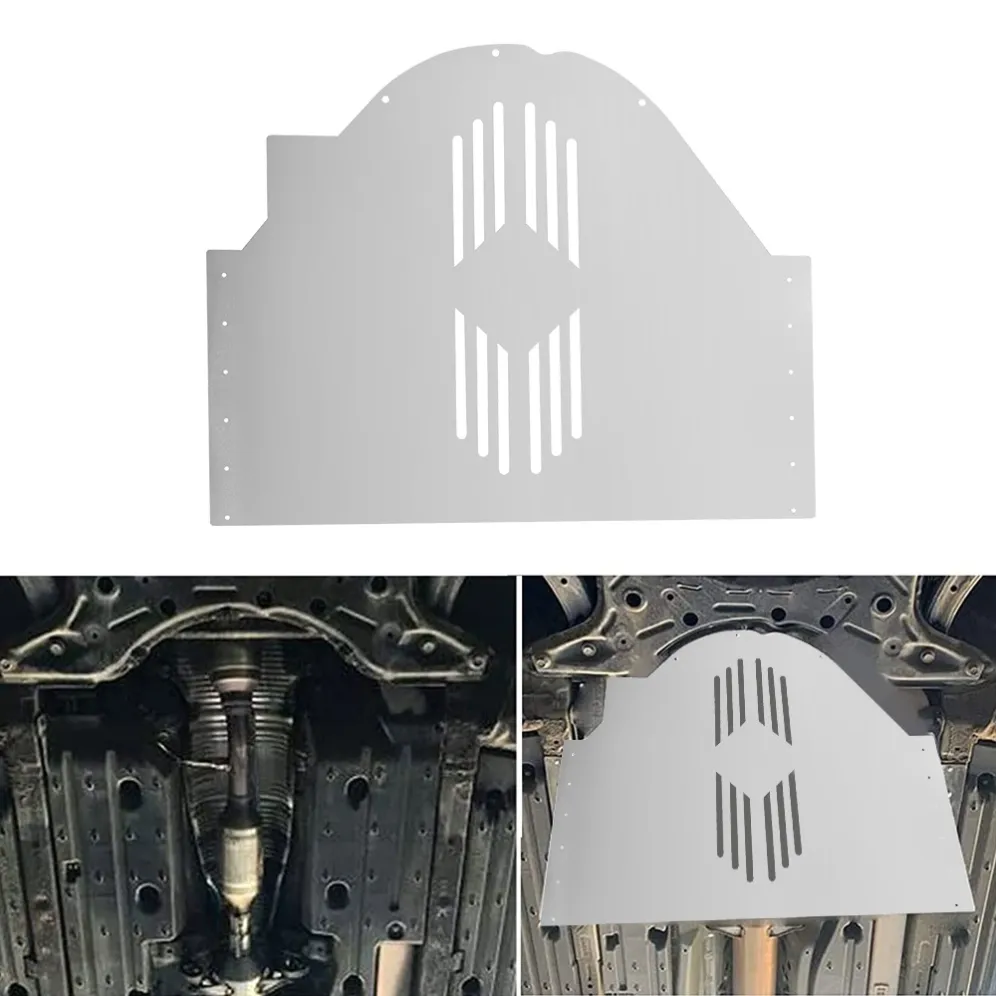
A catalytic converter anti-theft shield is a physical barrier installed around or near the catalytic converter area. The basic goal is to make direct access more difficult and add time, effort and visibility to an attempted theft.
A shield may use panels, mounting points, ventilation openings and application-specific geometry to cover vulnerable access areas while allowing clearance around the exhaust area. The exact design varies by vehicle.
Good product language should be factual:
Adds a physical barrier around the catalytic converter area
Helps make direct access more difficult
Uses a vehicle-specific shield configuration
Includes application-specific mounting design
Uses ventilation openings to support airflow around the exhaust area
Avoid language such as theft-proof, impossible to steal, cut-proof or 100% protection. Those phrases overstate what a physical shield can honestly promise.
What to Check Before Buying a Catalytic Converter Shield
Before sourcing or quoting a catalytic converter shield, buyers should confirm more than the vehicle name. Small fitment differences can matter.
Check these points first:
Vehicle year: A shield for one generation may not fit another generation.
Make and model: Confirm the exact application, not just the product family.
Shield configuration: Confirm whether the product covers the expected converter area.
Mounting configuration: Ask how the shield mounts and what preparation is required.
Material: Confirm the material and grade only when supplier documentation supports it.
Ventilation design: Look for openings or design features intended to support airflow around the exhaust area.
Hardware: Confirm what fasteners, brackets or rivets are included.
Installation requirements: Confirm whether professional installation is recommended and whether any drilling, cutting or special tools are required.
Package contents: Confirm the exact components before quoting or importing.
For B2B buyers, these details reduce avoidable returns and help sales teams answer customer questions without making unsupported claims.
Vehicle-Specific Catalytic Converter Shield Options
MetalPro Global focuses on vehicle-specific catalytic converters and catalytic converter anti-theft shields for selected automotive aftermarket applications. Current published shield options include:
2003-2011 Honda Element Catalytic Converter Shield
2004-2009 Toyota Prius Catalytic Converter Shield
2003-2008 Infiniti G35 Catalytic Converter Shield
These product pages should be reviewed for the current available configuration before quoting. If a buyer needs a different model year or vehicle application, the correct next step is to confirm availability rather than assume interchange.
Final Checklist
Before ordering a catalytic converter shield, confirm:
Vehicle year, make and model
Vehicle generation where relevant
Converter location and underbody layout
Shield configuration
Mounting configuration
Material information supported by supplier data
Ventilation design
Hardware and package contents
Installation requirements
Quantity, packaging and destination market
Looking for a vehicle-specific catalytic converter shield?
Send us the vehicle year, make and model so we can confirm the available product configuration.